Newshub-Detail
How Albisrieden combines work and living
Zurich is growing and becoming more densely populated. This is increasing the pressure on land for commercial and manufacturing use. In Albisrieden, the YOND Campus demonstrates how industrial heritage, flexible working environments and integration with a residential neighbourhood can be combined.
A city needs more than just homes and offices. It also needs places where things are manufactured, repaired, developed and where people are trained. However, as urban densification increases, conflicts over land use intensify: housing, work, production, transport and open spaces all compete for the same limited land. Commercial and production sites, in particular, are coming under pressure from rising land prices and competition from more profitable uses. If they are pushed out to the city’s outskirts or into the wider urban area, the city loses more than just economic diversity. Jobs, training opportunities and value creation are relocated, whilst commuting distances increase. At the same time, there is a risk of creating single-function neighbourhoods that are only bustling at certain times of the day. Mixed-use neighbourhoods, on the other hand, remain lively throughout the day and ensure short commuting and travel distances. Albisrieden is a prime example of such a development: from a rural village to an industrial and residential area. Industrial production became established on what would later become the Siemens site as early as the beginning of the 20th century. The Albiswerk, as it was then known, employed over 2,000 staff at times and had a significant impact on the neighbourhood. The YOND Campus aims to carry forward this historically developed mix of work and residential life in the neighbourhood in a contemporary way.
An industrial site continues to evolve
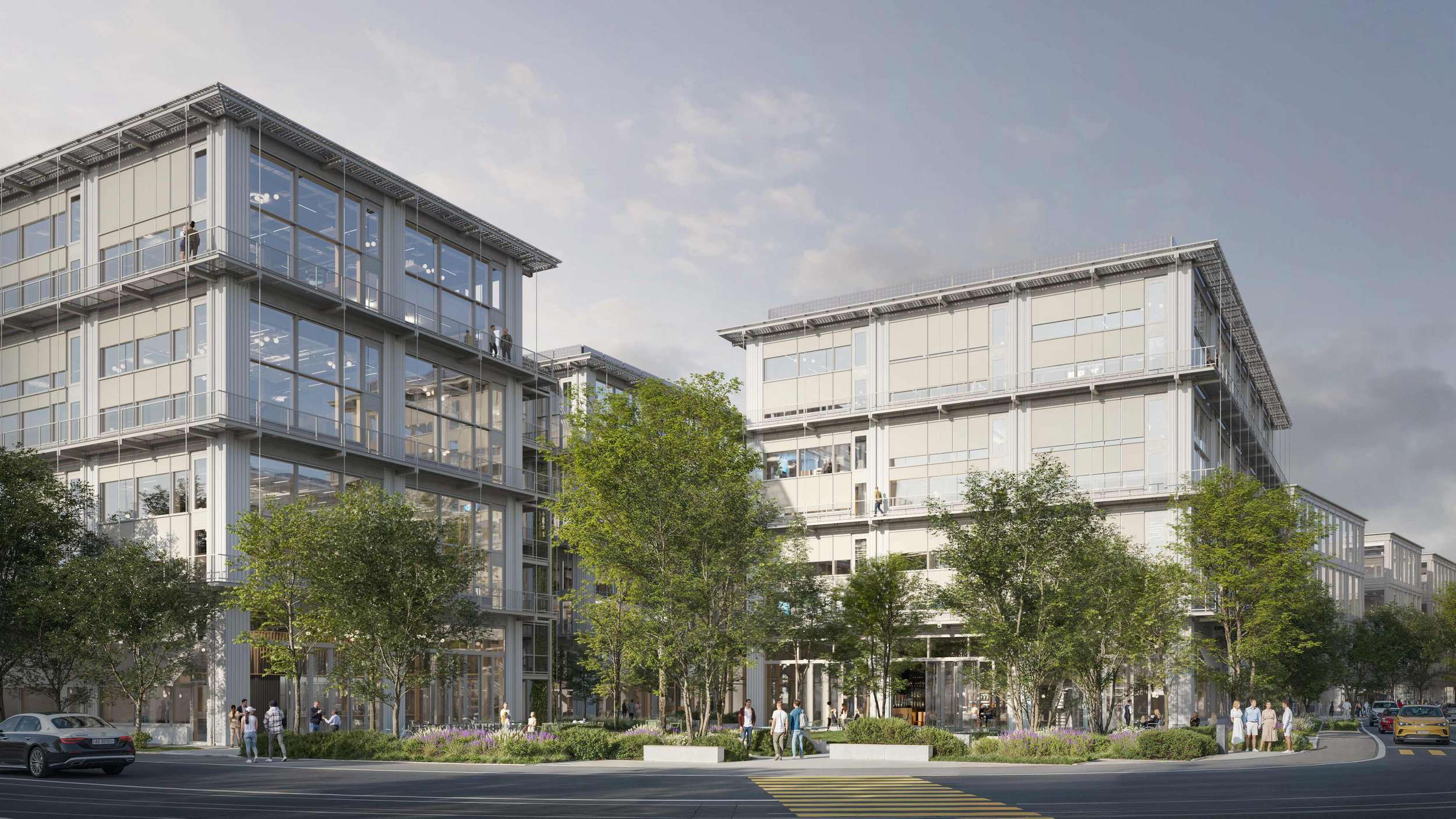
On the Albis site, the owner, Swiss Prime Site, is continuing the industrial tradition whilst enabling a new interpretation of it. To complement the YOND.01 building, which has been in operation since 2020, two new buildings, YOND.02 and YOND.03, are being constructed. In addition, an existing building, YOND.04, is being refurbished and integrated into the overall concept.
In total, around 35,000 square metres of additional lettable space is planned, primarily for businesses in the manufacturing, commercial and logistics sectors, as well as retail and services. Existing and future uses demonstrate just how diverse this mix can be: at YOND, the Turicum Distillery produces gin, Lokales Wasser 37 bottles drinking water from Zurich’s historic water network, and the aMa Pasticceria Gelateria Italiana complements the gastronomic offering. Züriwerk is also among the future tenants. The phased commissioning of the new buildings is planned from 2028 onwards. Flexibility is a key element. High-ceilinged spaces and modular structures are designed to accommodate a variety of operational requirements and allow for future adaptations. This means the buildings can be used for longer and adapted to changing needs.
More than just a business address
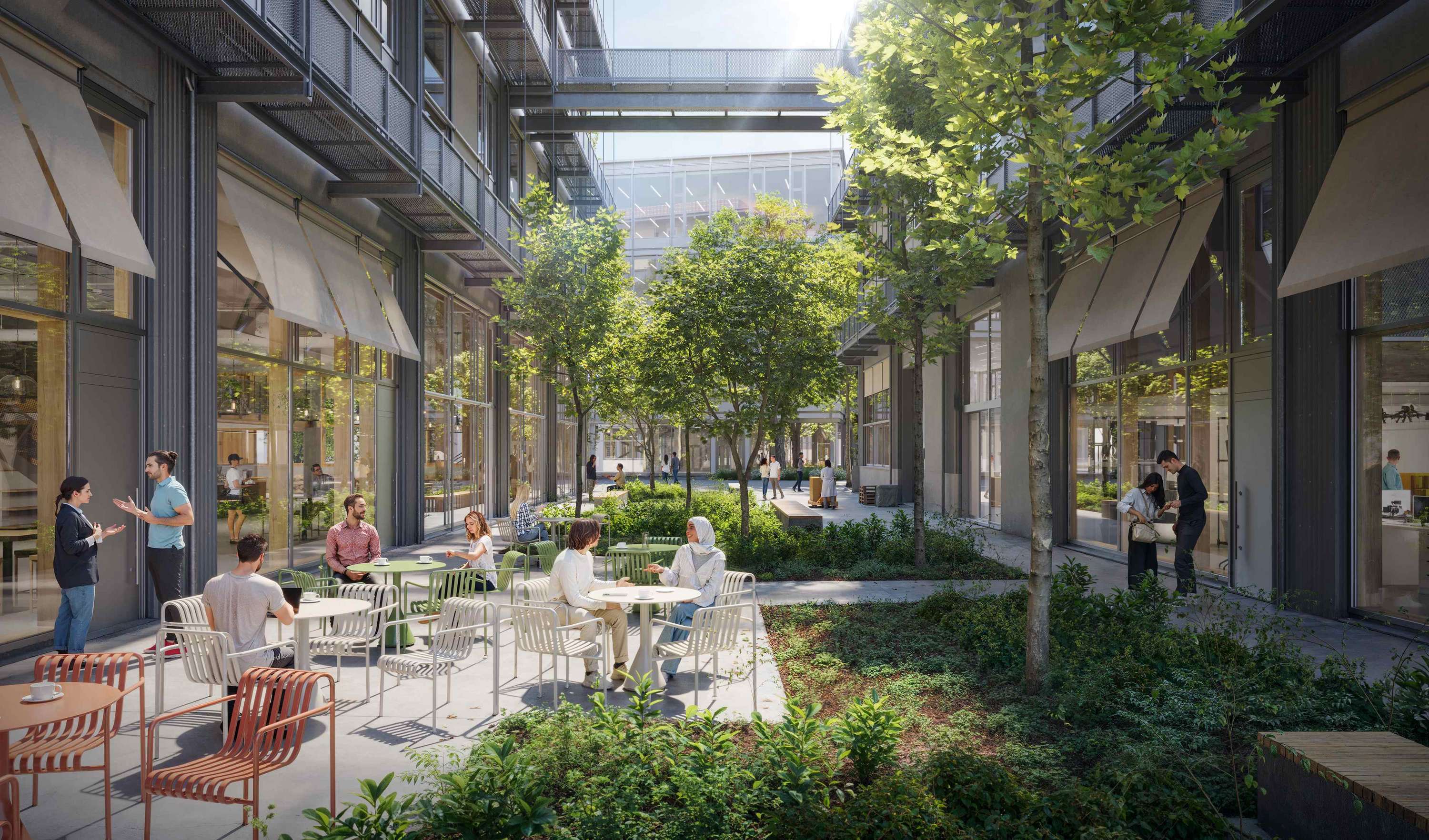
At the same time, the campus is set to integrate more closely with Albisrieden. Relaxation areas, meeting spaces and a more open layout will open up the site to the neighbourhood. Instead of a secluded industrial estate, the aim is to create a place where different businesses, activities and people come together. The development also embodies an approach in which transformation is not seen as a radical break with the existing fabric. Where appropriate, existing structures will be retained in line with the principles of the circular economy; new buildings will complement the site with contemporary spaces. In this way, the site’s industrial identity remains visible and tangible, without restricting its future use. The YOND Campus thus demonstrates that densification does not necessarily have to lead to the displacement of manufacturing. Additional spaces and commercial uses can also be integrated within the urban environment. In this way, economic diversity remains an integral part of the city.